How AI can enrich collaborative research
We participated at this year’s “Scientifica” science festival together with two Citizen Science projects. We demonstrated how the projects use artificial intelligence (AI) and asked visitors how they themselves interact with AI.
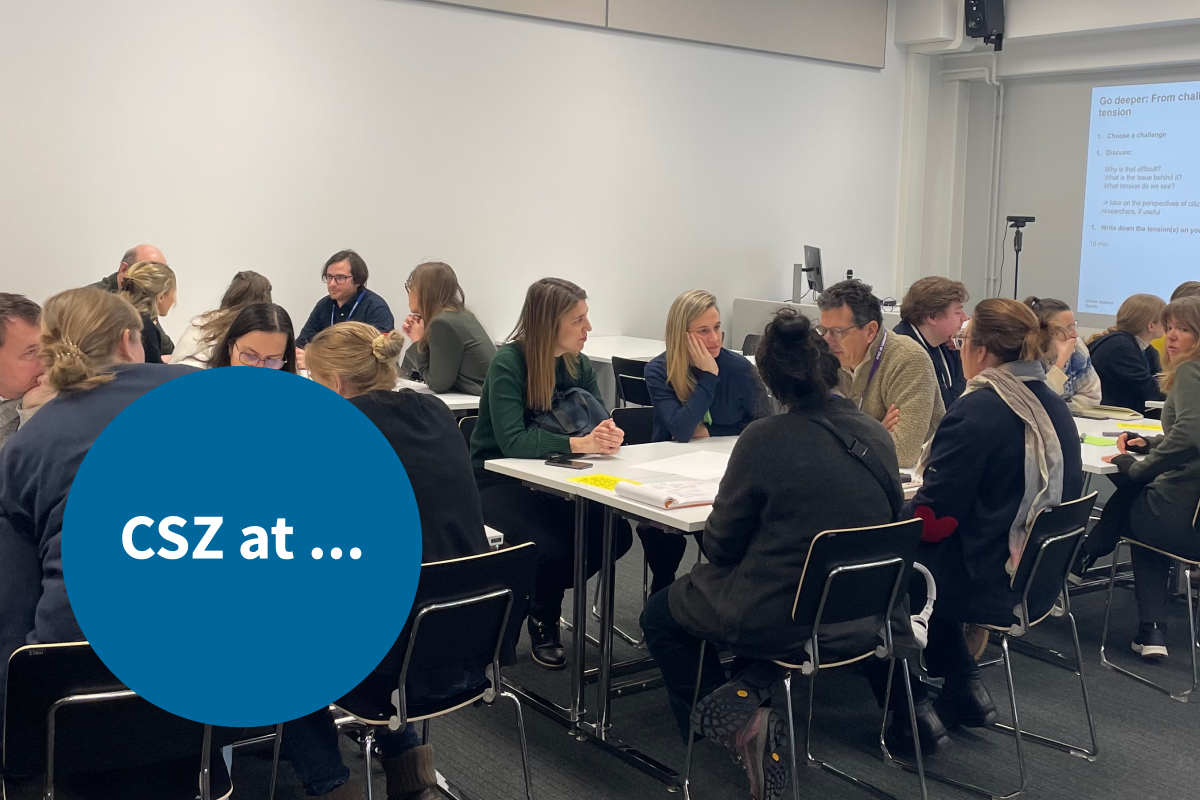
It was the largest Scientifica to date. At 80 exhibition booths and in various shows and workshops, scientists from the University of Zurich and ETH Zurich presented their latest research and invited visitors to experience science. Having the two Citizen Science projects “MyFlock” and “MAGIE” joining as examples, we demonstrated at our booth how AI can be put to good use in Citizen Science – whether in data analysis or as a creative sparring partner.
Smart Bird Feeders
The “MyFlock” project develops smart bird feeders and uses AI to identify garden birds. Citizens set up the bird feeder in their garden or on their balcony. With an interactive app they can then watch videos of the birds, give them names, and track their activities over an extended period of time. This is possible because the used AI not only recognizes bird species but also identifies each bird individually. The information gathered helps scientists learn more about birds and find ways to protect them.
At the booth, visitors could step into the role of AI themselves: In a game they could test their ability to identify birds and realized that it isn’t quite as easy as it seems.
Rewriting fairy tales
The “MAGIE” project is working with families to explore how fairy tales can stimulate children’s imagination, language, emotions, and social understanding. AI is used as a creative sparring partner – for example, with a fairy-tale building block set that recombines familiar narrative elements and brings them to life through illustrations. At the booth, children could invent their own fairy tales in a playful way. Using four dice, they rolled to determine the main character, antagonist, the setting, and an object, and then made up their own fairy tales based on these four elements. Overall, visitors were able to experience firsthand how old stories are retold, illustrated, and explored using modern technology.
Additional Information

Not isolated cases
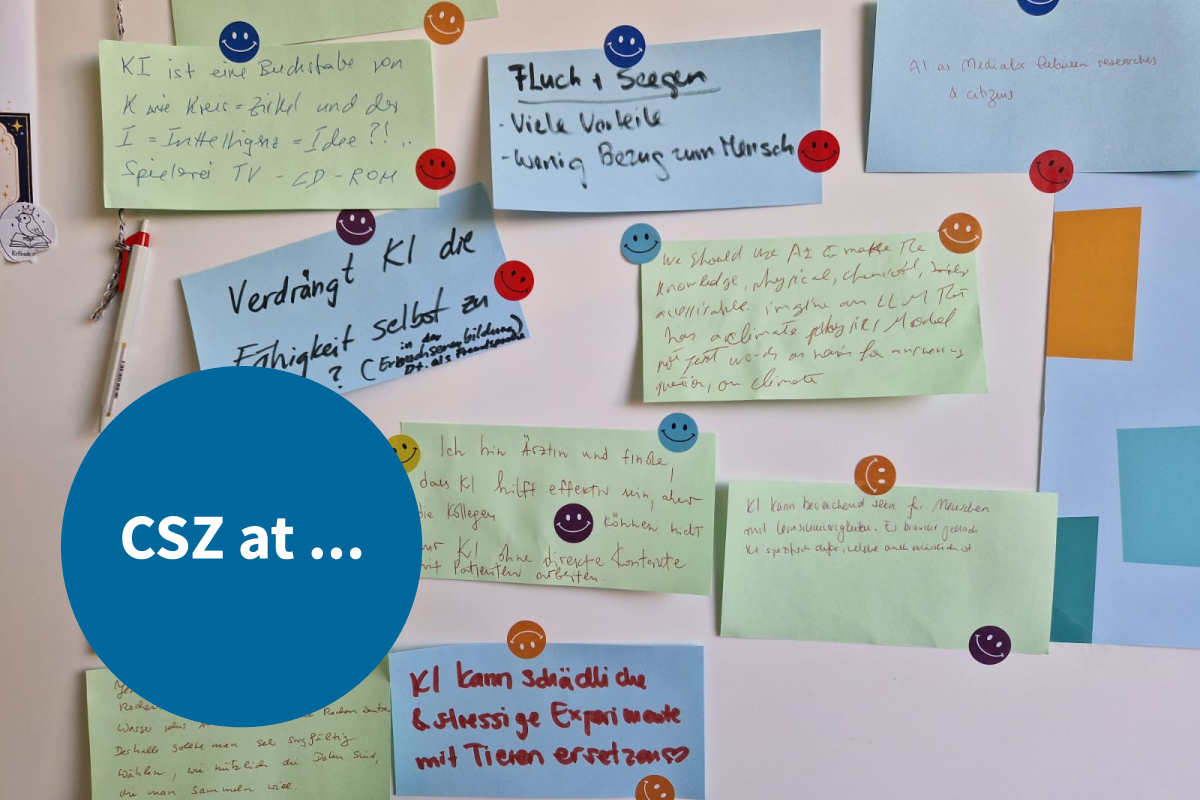
These examples show that artificial intelligence is playing an increasingly significant role in Citizen Science. In Citizen Science projects, AI can serve as a creative sparring partner, be used to analyze data, or break down barriers to participation, thereby making it easier for citizens to get involved. At the same time, there are also critical voices. What opportunities does the use of AI offer? What is about issues such as sustainability, data protection, or transparency? And what drawbacks might its use entail? We asked visitors at the Scientifica for their opinions.
Through engaging conversations and encounters, it has become clear that this topic resonates deeply with everyone. Many see AI as a helpful tool. It can facilitate collaboration across language barriers, support citizens and researchers in jointly formulating research questions, and create new avenues for Citizen Science. New opportunities are also emerging for research itself – for example, when AI can help replace harmful or stressful animal research with alternative methods.
At the same time, it became clear that the use of AI should not simply be taken for granted. Transparency and participation are key concerns. Citizen scientists should know when and how AI is being used and should have a say in those decisions. More fundamental questions also arose: What happens to our own abilities when AI takes on more and more tasks for us? What happens to creativity when we delegate our imagination, texts, and images to AI? And does AI reproduce existing biases and inequalities instead of questioning them? Amid enthusiasm for the possibilities and skepticism about an increasing dependence on AI, one thing became particularly clear: AI should support people, not replace them or turn them into objects of its application.
We remain committed
We continue to focus on the topic of AI and Citizen Science. Just recently, we co-founded the ECSA working group on Citizen Science & AI. Through this working group, we aim to promote the creation of a shared collection of use cases and the further development of guiding principles for the use of AI in Citizen Science.