AI as an Ally: Reimagining Artificial Intelligence for Inclusive Citizen Science
How can we use AI to amplify citizens' voices, foster dialogue, and enable more inclusive participation in scientific research? This was the central question of our workshop at the ECSA Conference 2026, which we organized together with ETH Zurich.
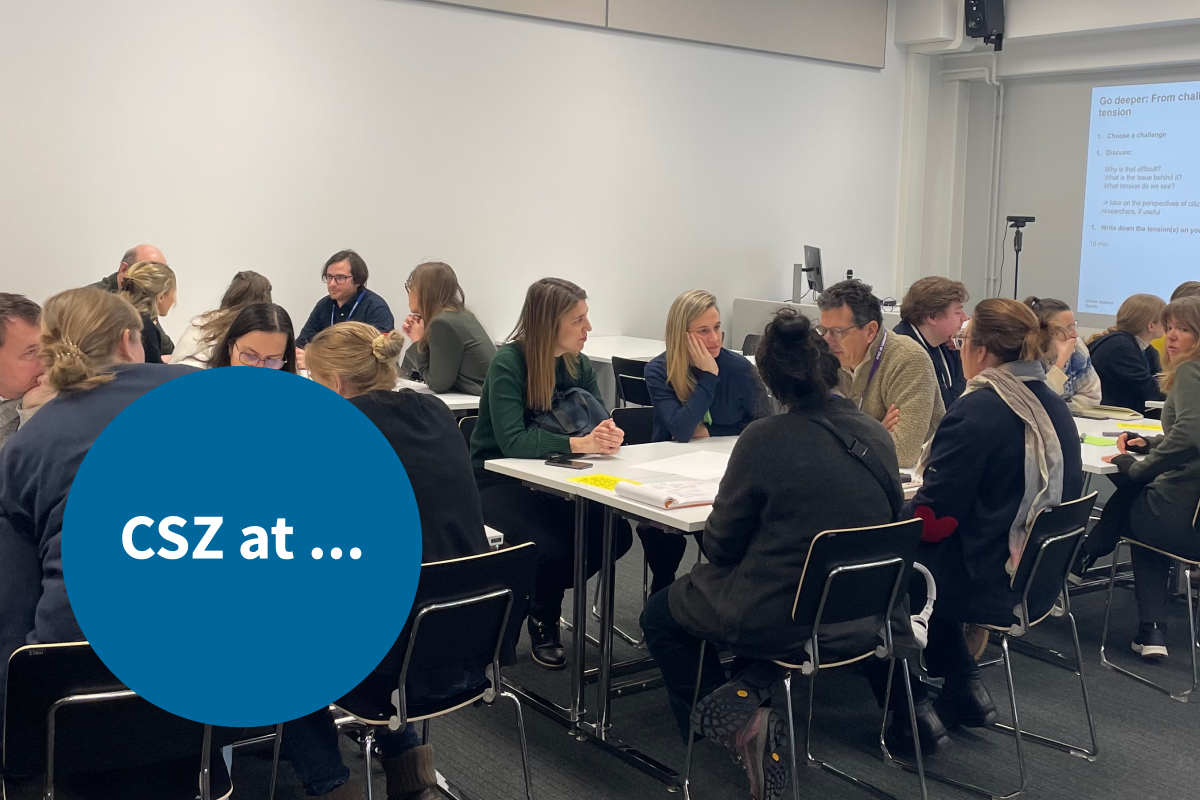
Artificial intelligence is often associated with automation, data collection, and the dominance of major technology companies. But what if AI could play a different role in citizen science? What if, instead of primarily extracting knowledge from citizens, it could amplify their voices, facilitate dialogue, and enable more inclusive participation in scientific research? These were the questions we explored during our workshop, "AI as Ally: Designing Participatory Tools for Citizen Science Across Centres and Peripheries," held at the ECSA Conference 2026 in Oulu. The workshop was co-organized with Benjamin Sawicki (at the time of the conference affiliated with ETH Zurich and the NCCR Automation).
Rethinking AI
Most AI systems are trained on vast datasets that often fail to capture local contexts and lived experiences. In our workshop, we deliberately shifted the focus, exploring how AI can be used in citizen science as a tool for participation, dialogue, and collaboration rather than simply as a means of collecting data from citizens.
Ahead of the conference, researchers, practitioners, designers, and technologists were invited to submit project examples and critical perspectives. We were particularly interested in contributions that viewed AI as a tool for fostering dialogue, reflection, and participation—not merely as a mechanism for extracting knowledge or data.
Six Perspectives on AI and Participation
The first part of the workshop featured five citizen science projects and one research study, each highlighting different approaches to using AI in citizen science:
Together, these diverse initiatives illustrated both the tremendous potential and the significant challenges involved in integrating AI meaningfully into participatory research.
From Use Cases to Challenges
While the projects varied widely in thematic focus, several common challenges emerged:
- How can we engage people with very different interests and levels of prior knowledge?
- How can projects reach both people who are passionate about nature and the environment but remain sceptical of AI, as well as technology enthusiasts who have little connection to nature or biodiversity?
- How can we communicate what AI is and how it is used within a project in an accessible and approachable way?
- How can we prevent personalised AI systems from reinforcing dominant or "average" perspectives?
- And how can a chatbot simultaneously function as a scientific research tool and as a source of personalised support?
Alongside discussions about transparency, data privacy, and the advantages and disadvantages of local AI solutions, participants also reflected on the risks of becoming overly dependent on AI. Commercial AI services, for example, may change their underlying models during the lifetime of a project or even discontinue services altogether. Moreover, as analysis and decision-making become increasingly automated, there is a risk that participants have fewer opportunities to develop scientific skills and begin to perceive their own role in the research process as less meaningful.
A Collaborative Process: From Challenges to Principles
During the second half of the workshop, around 50 participants worked together in interdisciplinary and internationally diverse groups. Their goal was to translate the identified challenges into an initial set of guiding principles for the use of AI in citizen science.
The workshop followed a four-step process:
- Go deeper – What tensions lie beneath the identified problems?
- Values and positions – Which values should guide our decisions?
- Refine the principles – How can these insights be translated into practical guidance?
- Collect and share – Which principles emerge across groups?
The discussions extended far beyond technical considerations, focusing instead on the ethical, social, and educational dimensions of AI in citizen science.
Emerging Principles for AI in Citizen Science
The workshop resulted in an initial collection of principles that may help guide future projects.
Transparency emerged as one of the central themes. Project leaders should clearly communicate when and why AI is being used, how it works, and what role it plays within a project. Only then can trust be established and citizens participate as informed and active contributors.
Participants also emphasized that AI should complement—not replace—human expertise. Particularly in fields such as biodiversity monitoring and nature observation, AI has the potential to strengthen existing knowledge and make it more accessible without displacing experts or dedicated citizen scientists.
Another major focus was learning. Citizen science should not only generate data but also help people develop scientific knowledge and skills. AI should therefore be designed in ways that encourage critical thinking, reflection, and active co-creation.
xSeveral groups also advocated for the co-creative development of AI systems. Researchers and citizen scientists should jointly decide which tasks AI should perform, where its boundaries lie, and how responsibilities should be shared. Such collaborative governance strengthens trust while ensuring that local knowledge and perspectives remain central.
The workshop produced the following simple but powerful principles for the use of AI in citizen science:
At the end of the workshop, one key question remained: Would we design our projects differently if we had started with these principles from the very beginning?
Looking Ahead
One thing became clear throughout the workshop: the future of AI in citizen science is about far more than just technology. It is a question of values, governance, education, trust, and societal participation. AI can become a true ally in citizen science when it does not replace people but instead enables participation, makes diverse perspectives visible, and supports collective learning.
To continue the conversation that began in Oulu, we have joined forces with Liz Dowthwaite (University of Nottingham) and Benjamin Sawicki to initiate a new working group on Citizen Science & AI within the European Citizen Science Association (ECSA). Through this working group, we aim to build a shared repository of use cases and further develop guiding principles for the responsible use of AI in citizen science. The enthusiastic response during and after the workshop showed that there is a strong interest within the community.
Would you like to join the conversation? We'd love to hear from you!
The opportunities and challenges of using AI in citizen science will also be a topic at this year's Scientifica. Save the date—29–30 August 2026—and come visit us at our stand!