BRIDGES – Bridging Agriculture, Society and Science
A Co-Creation Approach for Participatory Monitoring of Aquatic Biodiversity in Agricultural Landscapes
Context
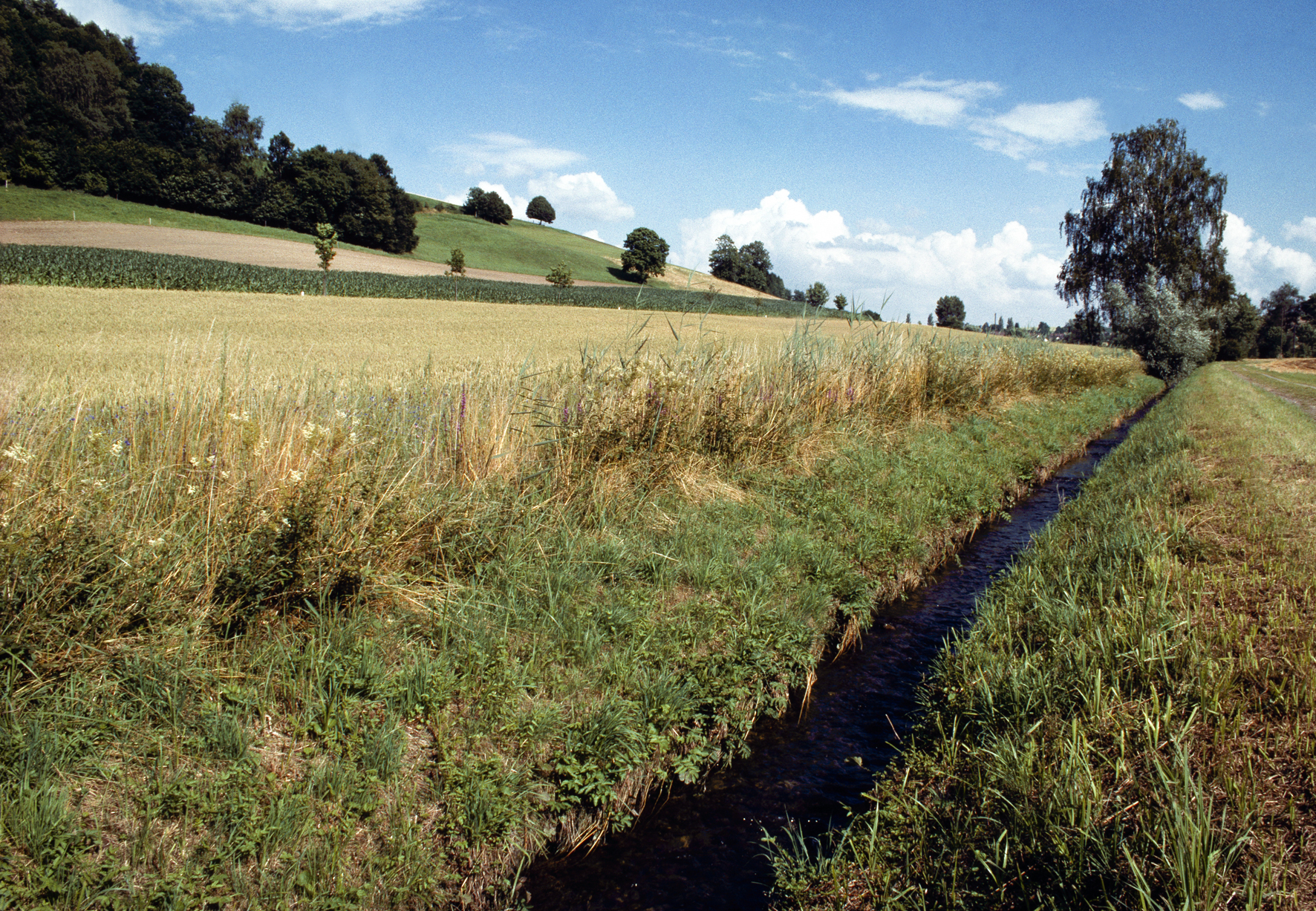
Existing biodiversity monitoring programmes do not adequately cover small streams in agricultural landscapes. At the same time, however, agricultural land and freshwater ecosystems are closely connected, with management practices, nutrient and plant protection product inputs, and changes in hydrology and stream structure all having the potential to affect water quality and the organisms living in these habitats. To better understand the relationships between management practices, landscape context, water quality and biodiversity, data is required at both the farm and landscape levels. While existing monitoring programmes provide important foundations, they can only capture small-scale, practice-relevant relationships to a limited extent.
BRIDGES addresses this gap by bringing together different perspectives: farmers contribute their knowledge of management practices and local conditions; citizens contribute societal perspectives and actively participate in monitoring; and scientists contribute methodological and ecological expertise. This collaborative approach fosters a shared framework for generating knowledge, jointly interpreting results, and enhancing our understanding of the influence of management practices and landscape context on biodiversity and water quality.
About the project
Together with farmers, citizens and scientists, BRIDGES is developing and piloting a participatory approach to monitoring aquatic biodiversity in agricultural landscapes. Participants work together to define objectives and suitable indicators, develop feasible monitoring methods, and test these methods in real-world conditions. The project goes beyond data collection. It brings together the different perspectives and forms of knowledge of those involved to enable them to interpret results together and develop a better understanding of the impact of management practices and landscape context on biodiversity and water quality. Farmers gain locally relevant information about the waterways in their area, while citizens gain insights into the connections between agriculture, freshwater ecosystems and biodiversity, and have the opportunity to actively participate in the research process.
Based on this, BRIDGES is developing a transferable Farmer–Citizen–Scientist approach to participatory biodiversity monitoring. Thus, the project provides a scientific and methodological basis for further monitoring and research activities, while also developing and testing formats for the exchange of ideas between agriculture, society, and science.
Project phases
BRIDGES is structured into four consecutive phases, with the involvement of farmers, citizens and scientists throughout the project. Initially, the participants jointly define the monitoring objectives, key research questions and suitable water bodies, as well as their respective roles. Based on this, appropriate indicators and monitoring methods are developed and tested in order to combine scientific robustness with practical feasibility.
The resulting monitoring approach is then implemented at selected sites. Farmers and citizens contribute to data collection, while the research team provides support for implementation and quality assurance. In the final phase, ecological data, information on management practices and the participants' experiences and perspectives are brought together and evaluated collectively. Based on these results, the approach is refined further and assessed for its potential transfer to other regions or research questions.
Participate in the project
Throughout all phases of the project, farmers and citizens can participate in activities such as co-designing the monitoring approach, collecting data and jointly interpreting the results. Participants are recruited through partner organisations and regional networks. Depending on their interests, availability and prior experience, participants can engage at different levels. Possible activities include assessing stream habitats, measuring water quality, conducting biodiversity surveys and jointly evaluating and interpreting the results. Farmers can also contribute their knowledge of management practices, local conditions, and changes to their land. No prior experience is necessary to take part in data collection, as training and accessible guidance will be provided, along with standardised materials to support participants in carrying out the activities.
A key benefit of participation is the direct exchange between farmers and citizens. These two groups are often only indirectly connected through agricultural products and rarely have the opportunity to engage with one another directly. BRIDGES creates a shared setting in which they can contribute their perspectives, experiences, and expectations, and exchange views on the links between agriculture, freshwater ecosystems, and biodiversity. At the same time, hands-on participation in monitoring provides direct engagement with streams, aquatic organisms and water quality within a specific landscape context.